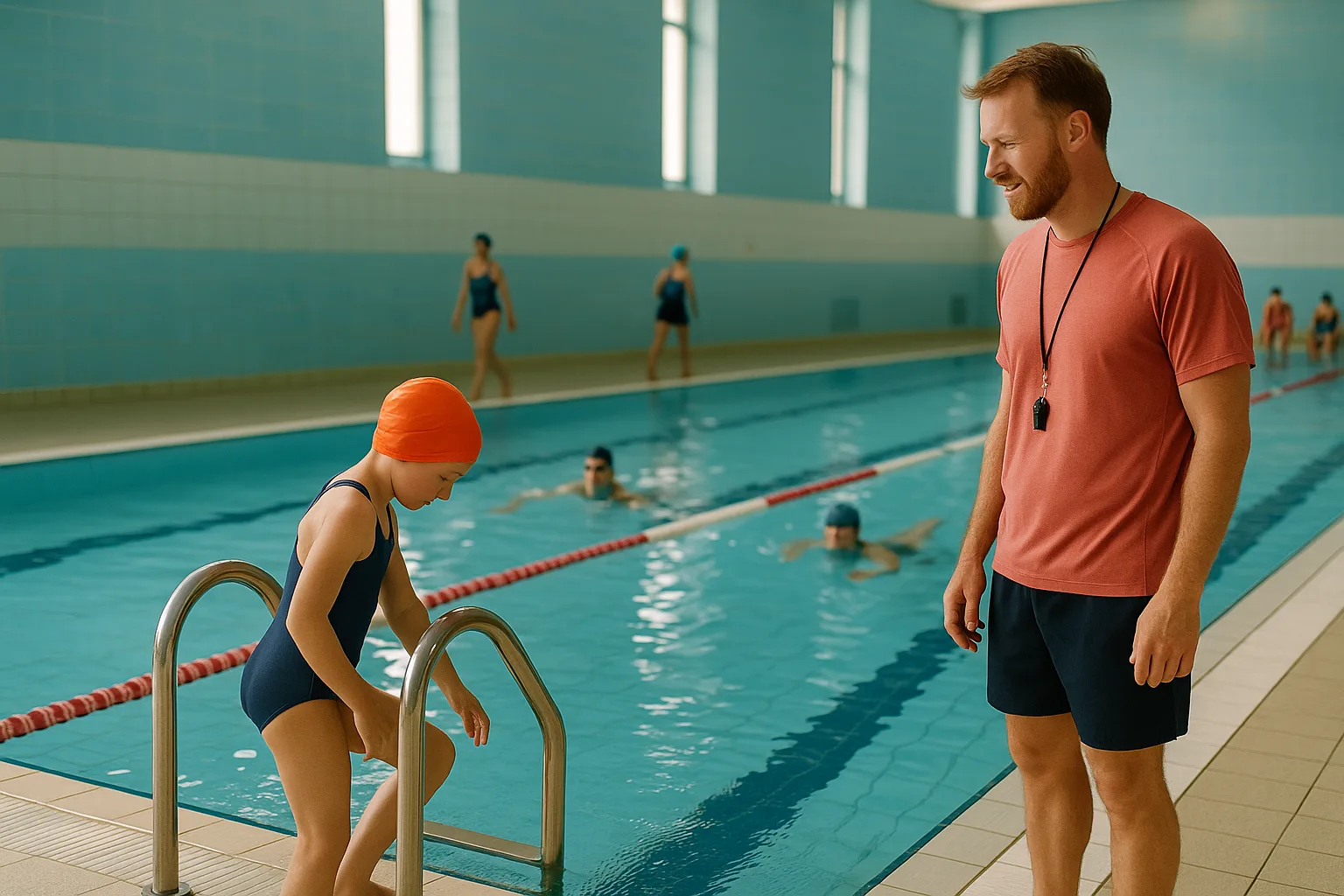
Swimming in Ufa: Building Water Confidence and Health Through Consistent Practice
Ufa’s long winters and thriving community life make swimming an especially valuable activity: it’s a year‑round way to build stamina, coordination, and resilience while teaching children and adults to feel safe and confident in the water. With regular, focused practice and the right local support—indoor pools, qualified instructors, and a consistent schedule—residents of Ufa can turn swimming into a lifetime of health benefits.
Why swimming matters in Ufa
— *Accessible all year.* Indoor pools in Ufa allow continual training regardless of weather.
— *Whole‑body fitness.* Swimming improves cardiovascular health, muscular strength, flexibility, and breathing control.
— *Early safety.* Water confidence reduces drowning risk and empowers children to participate in water activities safely.
— *Mental and social benefits.* Routine practice builds discipline, reduces stress, and fosters teamwork in group lessons.
How consistent practice builds water confidence and physical health
— Gradual exposure: Regular sessions let swimmers progress from water comfort to independent movement without overwhelming fear.
— Skill layering: Repetition secures breathing patterns, body position, and strokes so they become automatic.
— Conditioning effect: Frequent workouts increase aerobic capacity and muscular endurance; gains compound over weeks and months.
— Confidence loop: Small, measurable achievements (floating, 10 m freestyle, coordinated breathing) increase self‑efficacy and motivation to continue.
Age‑appropriate approaches
— Babies & toddlers (6 months–3 years)
— Focus: water familiarization, buoyancy play, parent‑child bonding, basic submersion comfort.
— Typical session: short, playful (20–30 min), warm water, high instructor/parent involvement.
— Young children (4–8 years)
— Focus: independent breathing, floating, kicking, basic stroke drills, safe entries/exits.
— Typical session: 30–45 min, consistent repetition, use of floats and games to teach technique.
— Older children & teens (9–17 years)
— Focus: stroke mechanics, endurance, starts/turns for competitive swimmers or longer‑distance fitness.
— Typical session: 45–90 min depending on goals; mix technique, drills, and aerobic sets.
— Adults & seniors
— Focus: technique, joint‑friendly cardio, rehabilitation, weight loss, social classes.
— Typical session: 30–60 min; gentle progressions, attention to breathing, mobility work.
Sample weekly practice plans
— Beginner child (2–3 sessions/week)
— 2× 30–45 min technique lessons + 1× 20 min free play for water comfort.
— Intermediate swimmer (3–4 sessions/week)
— 3× 45–60 min focused sessions: 15 min warm‑up, 25–35 min technique/endurance, 5–10 min cool down.
— Adult fitness (3 sessions/week)
— 3× 45 min swims combining steady aerobic sets and technique drills; add 1 dryland mobility session.
Adjust frequency and duration upward for competitive goals or downward when recovering from illness/injury.
What to look for in local lessons and facilities in Ufa
— Qualified instructors: certifications from national or regional swimming federations, first aid/CPR training.
— Age‑ and skill‑appropriate groups: small group sizes for beginners; clear progressions.
— Pool standards: clean, well‑maintained indoor pools with appropriate temperatures for children (warmer) and separate lanes for lap work.
— Safety measures: visible lifeguards, safe pool entry/exit, rules for supervision.
— Trial lessons and transparent pricing: ability to assess instructor fit and pool environment before committing.
Tip: ask schools about instructor-to-child ratios, lesson plans, and how they track progress.
Safety essentials
— Never leave unsupervised children near water.
— Verify instructor qualifications and lifeguard presence.
— Ensure appropriate pool depth and temperature for the swimmer’s age and ability.
— Use well‑fitting goggles; for beginners, use complementary aids only under instructor guidance.
— Parents: learn basic water rescue and CPR—this multiplies safety beyond lessons.
Tools and techniques to accelerate progress
— Skill drills: breathing drills, streamline glides, kick sets, single‑arm or catch drills for stroke refinement.
— Video feedback: short underwater or poolside clips can quickly reveal technique issues.
— Dryland work: core stability, shoulder mobility, and leg strength exercises improve in‑water performance.
— Consistent feedback: short, actionable corrections each session beat infrequent long critiques.
Measuring progress and staying motivated
— Set short, achievable goals (e.g., float unassisted 30 seconds; swim 25 meters freestyle).
— Keep a simple log: date, duration, skills practiced, one achievement.
— Celebrate milestones publicly—awards, badges, or a small ceremony at your pool boosts engagement.
— Rotate activities: technique days, fun games, timed swims to prevent monotony.
Practical next steps for Ufa residents
— Visit local municipal pools, sports schools (ДЮСШ), or private swim clubs to compare programs.
— Book a trial lesson to assess instructor style and pool environment.
— Commit to a realistic schedule—consistency is more important than intensity at the start.
— If you’re a parent, accompany early lessons and reinforce practice with safe, supervised water play.
Conclusion
In Ufa, where indoor facilities make swimming available year‑round, consistent practice is the key to turning initial water apprehension into enduring confidence and robust physical health. With the right instructors, steady progressions, and safety practices, swimming becomes not just a skill but a lifelong habit that benefits body and mind.
Get started this week: find a trial lesson, set one clear short‑term goal, and plan your first month of sessions. Small, regular steps create big, lasting change.