Introduction
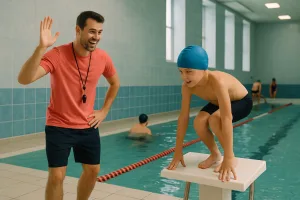
Swimming is one of the best activities for building water confidence, improving physical health, and developing lifelong motor skills. In Ufa’s continental climate—with long winters and summer opportunities—swimming provides year‑round exercise, helps children gain vital coordination and safety skills, and supports adult fitness with low joint impact. This article explains why consistency matters and gives practical, progressive guidance for parents, beginners, and adults who want steady progress in the pool.
Why water confidence matters
— *Safety first*: Confident children and adults are less likely to panic in water environments.
— *Foundation for learning*: Comfort in water makes technical skill acquisition (breathing, stroke mechanics) much faster.
— *Long-term participation*: People who feel at ease in water are more likely to keep swimming regularly—amplifying health benefits.
Physical and developmental benefits
— Cardiovascular fitness and improved lung capacity
— Full-body strength and muscular endurance, with low joint stress
— Better balance, coordination and motor skill development—especially in young children
— Mental health benefits: reduced stress, improved mood and sleep
— Rehabilitation and injury‑friendly training option for adults
Principles of consistent practice
— Frequency: Aim for 2–4 sessions per week for steady improvement. Minimal effective frequency is 2 times/week; 3+ times accelerates progress.
— Duration: Sessions of 30–60 minutes depending on age and fitness. Total weekly time matters more than a single long session.
— Progression: Small, measurable goals (e.g., independent float → 5 m kick → 15 m unassisted swim).
— Variety: Mix skill work, drills, endurance sets, play (for kids) and technique-focused repeats.
— Rest and recovery: Include easy sessions and rest days to avoid fatigue and plateauing.
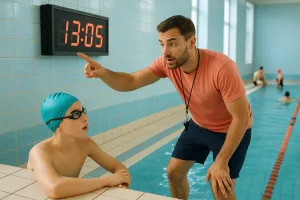
— Professional guidance: Use certified instructors to ensure safe, efficient technique and progression.
A practical 12‑week progression (general guide)
— Weeks 1–4: Water acclimation and breath control
— Goals: Comfortable entry, blowing bubbles, face in water, assisted floats
— Frequency: 2–3×/week, 20–30 min sessions for children; 30–45 for adults
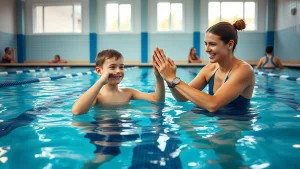
— Activities: Games, supported back float, basic kicking with board, bubble blowing
— Weeks 5–8: Independent floating and basic propulsion
— Goals: Unassisted float, 5–10 m streamlined glide, kicking with proper leg action
— Frequency: 2–3×/week, 30–45 min sessions
— Activities: Glide + float repeats, kick sets (with board), simple arm drills (pulling basics)
— Weeks 9–12: Combining breathing, strokes and endurance
— Goals: Coordinate breathing with strokes, swim 15–25 m continuously
— Frequency: 3×/week preferred, 30–60 min sessions
— Activities: Drill sets focusing on breathing timing, short continuous swims, introduction to front crawl arms
Note: Individual pace varies. Some reach milestones faster; others need longer consolidation.
Sample 45‑minute session structure
— Warm-up (5–7 min): Easy kicking, breath control exercises
— Skill focus (15–20 min): Drill work (floating, gliding, single-arm strokes, breathing)
— Short sets (10–12 min): Repeats of short swims (e.g., 4 × 25 m) with rest
— Play/variation (5–7 min): Games for kids, technique games for adults to maintain motivation
— Cool-down and stretch (3–5 min)
Practical drills and activities (by stage)
— Water confidence drills:
— Bubble blowing and face submersion games
— Supported back floats and log rolls
— Gentle underwater retrieval of objects (very shallow and supervised)
— Propulsion drills:
— Vertical kicking (helps leg strength and balance)
— Kickboard sets: focus on steady, straight kicks
— Single-arm front crawl, focusing on body rotation
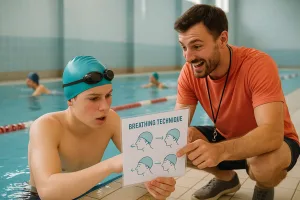
— Breathing drills:
— Side breathing while holding flotation
— Exhale underwater, inhale quickly to the side
— 3-stroke breathing cycles (for endurance training)
— Games for children:
— Treasure hunts, relay races, countdown floating
— “Shark” (safe tag) with instructors controlling intensity
Gear and practical considerations
— Appropriate swimwear and swim caps; goggles to reduce eye irritation and increase confidence
— For beginners or children: short-term use of flotation aids (kickboards, noodles) but plan to wean off
— Pool temperature: For babies and toddlers, warmer pools (30°C+) are more comfortable; for older children and adults, 26–29°C is typical
— Hygiene: Shower before entering the pool, check pool cleanliness and ventilation
Safety tips
— Never leave children unattended around water—even if they are taking lessons
— Choose facilities with lifeguards on duty and instructors certified in water safety and first aid
— Ensure instructors use progressive, evidence-based teaching methods and clear emergency procedures
— For open-water practice (rare in Ufa given climate), only after strong pool confidence and with experienced supervision
Finding programs and resources in Ufa
— Look for: municipal pools, youth sports schools (ДЮСШ), private swim clubs, parent-child classes at local sports centers
— How to find them: local search engines, parenting groups, social media communities, recommendations from pediatricians or local sports departments
— Verify: coach qualifications, group sizes, class structure, safety protocols and recent parent reviews
When to consult a professional
— If a child or adult shows persistent fear or refuses to enter the water despite progressive exposure
— If there are medical concerns (asthma, heart conditions, recent injuries)
— For tailored aquatic rehabilitation plans or competitive swimming coaching
Conclusion
Consistent, progressive practice is the shortest path to water confidence and measurable physical health benefits. In Ufa, the availability of indoor pools makes year‑round training practical. Start with small, frequent sessions, use qualified instruction, set incremental goals, and keep sessions fun—especially for children. Over weeks and months, steady practice will convert nervousness into confidence and build stronger bodies and minds.
Emphasize consistency over intensity: two focused, well‑structured sessions per week will produce real change. If you’d like, I can help design a personalized 8‑ or 12‑week plan for a child or adult swimmer in Ufa.