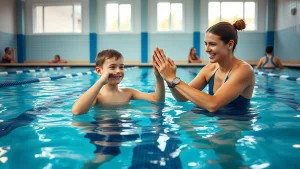
Growing Water Confidence and Lifelong Health: Swimming Education through Consistent Practice in Ufa
Swimming is more than a sport — it’s a life skill that builds cardiovascular fitness, coordination, mental resilience, and water confidence from early childhood through adulthood. In Ufa, where long winters make indoor aquatic facilities essential and summers invite lake swims, a structured approach to swimming education and consistent practice produces the best, safest outcomes.
Why swimming matters for physical and mental health
— Cardiovascular conditioning: swimming develops heart and lung capacity with low joint impact.
— Whole-body strength and coordination: swimmers engage core, back, legs and arms in a balanced way.
— Motor skill and balance development in children: water encourages proprioception and refined movement.
— Mental benefits: reduced stress, improved self-esteem, and increased focus from mastering new skills.
— Safety and independence: water confidence reduces panic and improves the ability to respond in emergencies.
Building water confidence: progressive, supportive steps
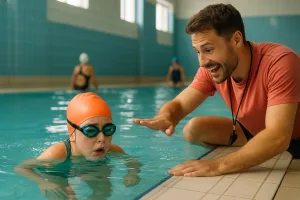
— Start with play-based familiarization: blowing bubbles, submerging face briefly, kicking at the poolside.
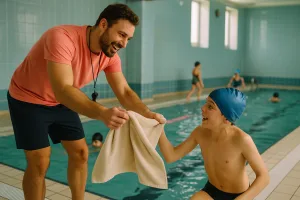
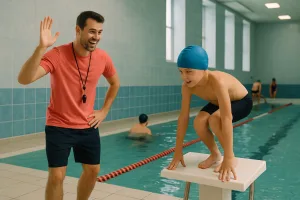
— Use positive reinforcement: celebrate small wins and avoid pressure.
— Gradual immersion: progress from standing in shallow water to supported floating, then independent glides.
— Teach breath control early: nose and mouth control helps children feel secure.
— Introduce basic survival skills: floating on back, treading water, reaching for the pool edge.
— Mix individual and group lessons: groups provide social motivation; private lessons accelerate technique.
The role of consistent practice
Consistency matters more than intensity. Regular, short sessions build neural pathways, motor patterns, and aerobic base without overstress.
— Recommended frequency: 2–4 sessions per week depending on age and goals.
— Session length: 20–30 minutes for pre-schoolers; 45–90 minutes for school-age and adults depending on training level.
— Progressive overload: slowly increase duration, distance, and technical complexity every 2–4 weeks.
— Rest and recovery: schedule lighter sessions and days off to prevent fatigue or injury.
Sample 8-week plan for beginners (3 sessions/week)
Week 1–2: Water familiarization
— Focus: breath control, blowing bubbles, kicking drills, assisted floating.
— Sessions: play + 10–15 minutes focused drills.
Week 3–4: Fundamental skills
— Focus: independent floating, front glide, basic arm recovery, rhythmic breathing.
— Sessions: technique drills, short swims (5–10 m), games to reinforce skills.
Week 5–6: Building endurance and coordination
— Focus: combine arms and legs over 10–25 m, introduction to backstroke or breaststroke basics.
— Sessions: interval swims, skill practice, gentle endurance sets.
Week 7–8: Consolidation and confidence
— Focus: continuous swims up to 50–100 m, treading water, simple turns and entries.
— Sessions: mixed technique and endurance, simulated safe open-water awareness.
Adapt intensity and progression to age and individual comfort level.
Age-appropriate guidance
— Infants (6 months–2 years): caregiver-assisted water play focusing on comfort and basic skills. Emphasize hygiene and short sessions.
— Preschoolers (3–5 years): fun-based lessons building independent submersion, floatation, and breath control.
— School-age (6–12 years): technical skill development, stamina, and safety skills. Introduce structured drills and water-safety knowledge.
— Teens & adults: focus on technique, fitness goals, and confidence. Adults often progress faster technically but may need more time for fear reduction.
Safety essentials for Ufa residents
— Choose heated indoor pools in winter: Ufa’s continental climate makes indoor facilities essential year-round training spaces.
— Check pool hygiene and lifeguard presence: ensure trained staff and up-to-date safety protocols.
— Use appropriate equipment: goggles, swim cap, flotation aids for beginners, and properly fitted life jackets for open-water activities.
— Supervision: never leave children unattended near water — constant adult supervision is required.
— Open water caution: if swimming in rivers or lakes in summer, respect currents, cold water shock, and check local safety advisories.
How to choose a program or coach in Ufa
— Qualifications: look for coaches certified in swimming instruction and first aid/CPR.
— Group size and child-to-coach ratio: smaller groups allow more individual attention.
— Program structure: progressive curriculum with measurable milestones and regular feedback.
— Environment: warm, clean pools with clear safety measures and welcoming staff.
— Trial lessons: attend a trial class to assess teaching style and child comfort.
— Community options: consider municipal pools, sports schools (DYuSSh-style youth sports programs), university pools, and private swim clubs depending on goals and budget.
Equipment and practical tips
— Invest in comfortable goggles and a snug swim cap.
— Use swim-specific training aids appropriately: kickboards, pull buoys, fins for technique work.
— Keep sessions fun for children: integrate games, relays, and imaginative play to sustain motivation.
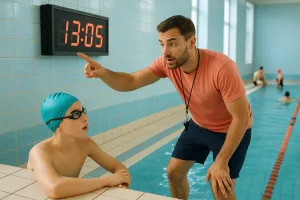
— Track progress: short videos, distance logs, and simple time trials help show measurable improvement.
— Nutrition & rest: ensure balanced meals and adequate sleep to support training gains.
Measuring progress and setting goals
— Short-term goals: entering water confidently, floating independently, swimming 25 m continuously.
— Medium-term goals: mastering a stroke with coordinated breathing, swimming 100–200 m.
— Long-term goals: joining a swim club, competing, or confidently swimming in open water.
— Use objective markers: distance, stroke counts, and timed intervals — combined with subjective markers like reduced fear and increased enjoyment.
Final recommendations
— Begin early and be patient: consistent, positive exposure builds durable skills and confidence.
— Prioritize safety and qualified instruction: the right environment and coach accelerate progress.
— Embrace the seasonal rhythm in Ufa: focus on indoor pools during winter and supervised, cautious outdoor practice in summer.
— Make swimming a family activity when possible: parental involvement enhances motivation and models water safety.
If you’d like, I can help draft a sample weekly lesson plan for a specific age group, or a checklist of questions to ask swim schools and coaches in Ufa. Which would you prefer?