Introduction
Swimming is one of the best activities for building water confidence and improving overall physical health. In Ufa — with long winters and many indoor pools — regular swimming practice is an accessible, low-impact way for children and adults to stay active year-round. This article explains how consistent practice develops skill and self-assurance in the water, outlines practical training plans, and gives safety and local-minded tips to help you get started.
Why consistent practice matters
— *Skill acquisition is cumulative.* Motor patterns, breath control and stroke technique improve only with repetition and progressive challenge.
— *Confidence grows from predictable success.* Small, measurable wins (float 10 sec → 30 sec; 5 m → 25 m) reduce fear and increase enjoyment.
— *Health benefits compound.* Regular sessions improve cardiovascular fitness, muscular strength, flexibility, posture, and mood better than irregular activity.
Health benefits of regular swimming
— Cardiovascular endurance: steady aerobic work for heart and lungs.
— Full-body strength and tone: water provides resistance for arms, core, legs.
— Joint-friendly training: buoyancy reduces impact — ideal for people with joint issues.
— Improved breathing control and lung capacity.
— Mental health: stress reduction, better sleep, and increased confidence.
— For children: motor development, coordination, and social skills.
Stages of water-confidence development
1. Acclimatization
— Playful entry, splashing, blowing bubbles.
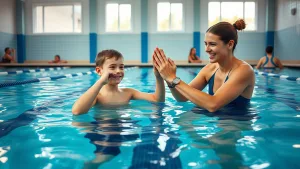
— Supported floating and gentle submersion.
2. Breath control and basic mobility
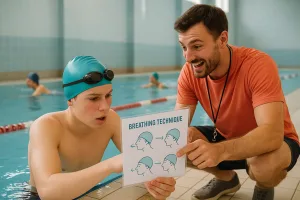
— Rhythmic breathing drills, kicking on board.
3. Independent movement
— Short unaided glides, basic back and front floats, 5–25 m swims.
4. Technique and endurance
— Stroke development (freestyle/backstroke), turns, breathing rhythm.
5. Performance and maintenance
— Continuous 200+ m swims, interval sets, varied sessions to stay motivated.
Sample session structure (all ages)
— Warm-up (5–10 min): walking in shallow water, arm circles, easy kicking.
— Skill or drill focus (15–20 min): breath control, floats, kicking, stroke drills.
— Technique & endurance sets (15–20 min): short repeats (25–50 m) with rest; progress to longer sets.
— Play/cool-down (5–10 min): easy floats, gentle strokes, stretch on poolside.
Recommended frequency and session length
— Toddlers (2–4): 1–2 times/week, 20–30 min, parent-assisted.
— Children (5–12): 2–3 times/week, 30–45 min.
— Teens/adults: 2–4 times/week, 45–60 min.
— Beginners should prioritize frequency over session length (short, consistent visits beat occasional long workouts).
Practical drills to build confidence
— Bubble blowing: face in water, blow bubbles in rhythm.
— Supported back float: instructor or parent supports until child relaxes.
— Kick-and-glide: push off wall, streamline glide, then breathe and return.
— Short shuttle swims: 5–10 m swims with rest, gradually increasing distance.
— Breathing sets: 6 kicks/6 strokes with focus on exhale underwater and quick inhale.
Progress metrics to track
— Floating time (seconds) without support.
— Maximum unaided distance (m).
— Continuous swimming distance at a comfortable pace (m).
— Number of breaths per stroke cycle and comfort with bilateral breathing.
Record improvements every 2–4 weeks to keep motivation high.
Safety essentials (especially in Ufa)
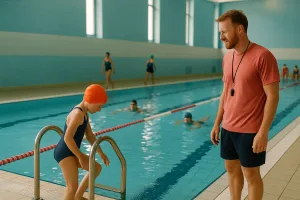
— Always choose supervised pools with lifeguards and clear hygiene standards. Ufa’s many indoor facilities are ideal during winter.
— Never swim alone — use buddy systems or supervised lessons.
— Check water temperature and depth for children and beginners.
— Ensure instructors are properly qualified; ask about teaching approach and safety training.
— For open water (summer lakes/rivers around Bashkortostan): swim only in designated safe areas, avoid strong currents, and never dive in unknown spots.
Gear checklist
— Well-fitting goggles and swim cap.
— Comfortable swimsuit and non-slip sandals for poolside.
— Float aids for early stages (kickboards, small floats) used as stepping stones, not permanent crutches.
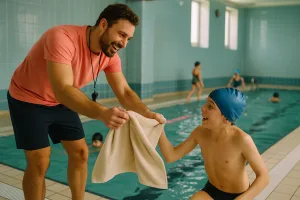
— Towel, warm clothes for post-session, small first-aid kit.
— Optional: ear-drying drops and nose clips as needed.
Building consistency — tips that work
— Schedule swim times like appointments; treat them as non-negotiable.
— Pair lessons with social goals (friends, family sessions) to increase enjoyment.
— Use small rewards and celebrate milestones.
— Mix skill-focused sessions with fun, game-based swims to avoid burnout.
— Track progress visually (calendar, chart) and review monthly.
— Combine swimming with light strength or mobility work on land for balanced fitness.
Local considerations for Ufa residents
— Use indoor public pools, sports schools and private swim clubs to stay active year-round. Municipal programs often offer affordable group lessons.
— In winter, prioritize well-heated indoor facilities and check schedules early — peak times can be busy.
— Summer opens opportunities for supervised lakes and reservoirs, but prioritize safety and local rules.
— Community programs (schools, fitness centers) may provide beginner-friendly classes and family swim times — inquire locally.
For parents and adult beginners: choosing instruction
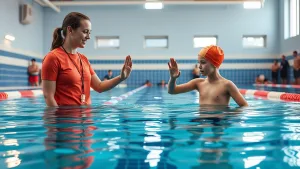
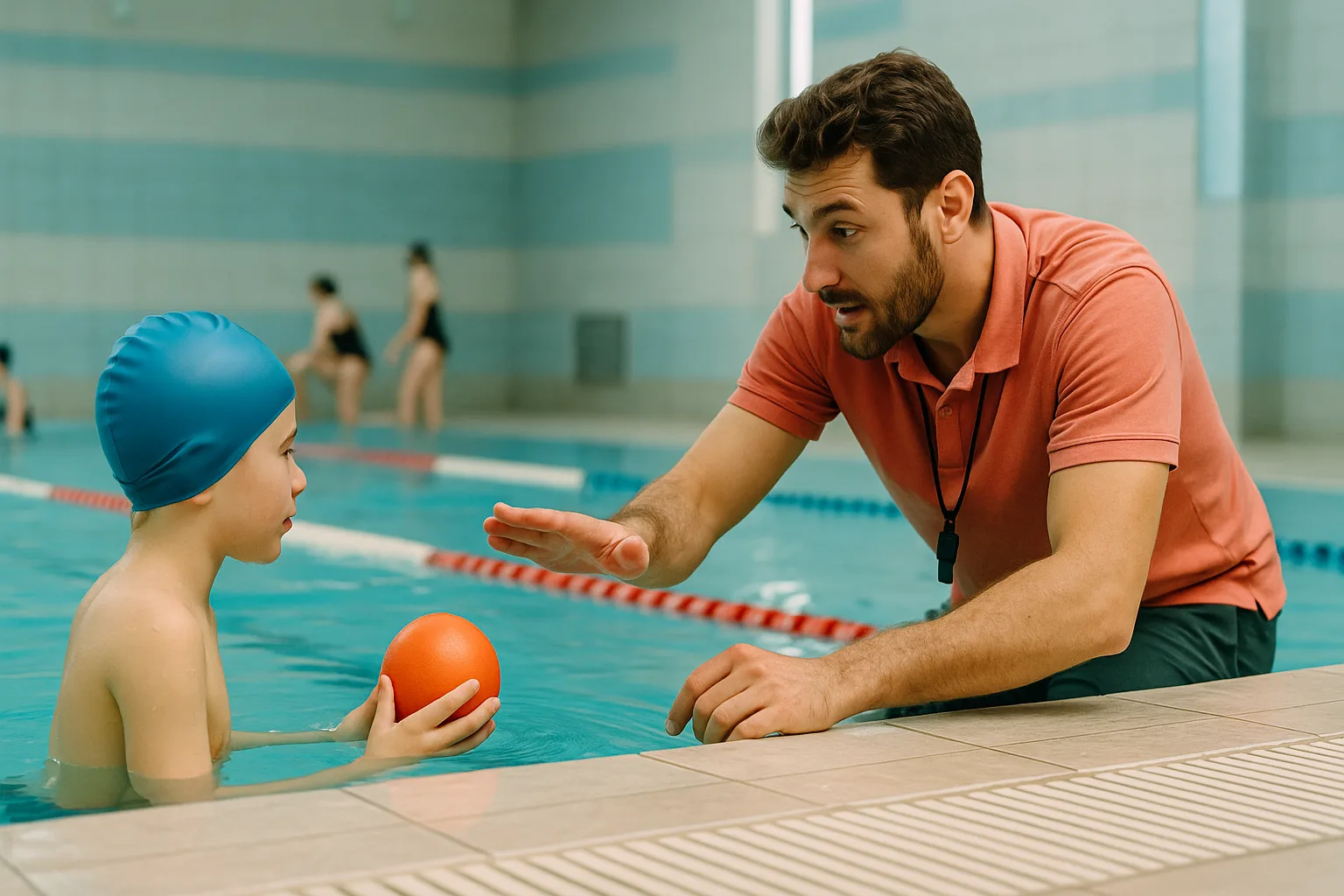
— Look for instructors who emphasize gradual exposure, safety, and positive reinforcement.
— Ask about class size, teacher-to-student ratio, and the progression plan.
— Request a trial lesson to assess rapport and teaching style.
— For nervous adults, private lessons or small-group masterclasses speed up progress and build confidence faster.
Eight-week starter plan (example)
— Weeks 1–2: 2 short sessions/week — focus on breath control, playful entry, supported floats.
— Weeks 3–4: 2–3 sessions/week — add kicking drills, short glides, 5–15 m unaided swims.
— Weeks 5–6: 2–3 sessions/week — basic freestyle/backstroke introduction, 25–50 m repeats.
— Weeks 7–8: 3 sessions/week — technique refinement, 100–200 m continuous swims, introduce simple intervals.
#