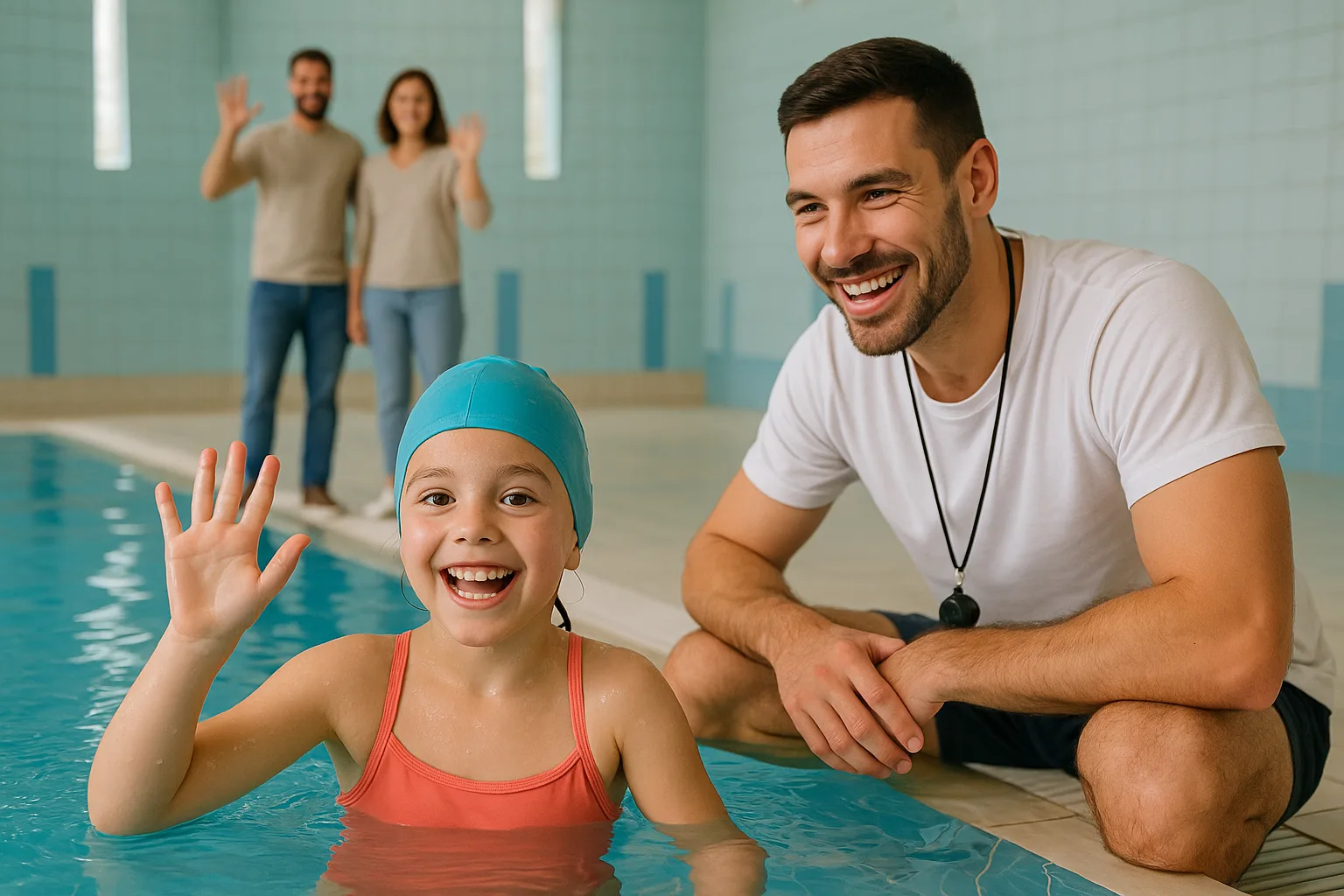
How Consistent Swimming Practice Builds Water Confidence and Stronger Bodies — A Guide for Families in Ufa
Swimming is more than a life skill — it’s a pathway to improved physical health, lifelong water confidence, and emotional resilience. For parents, coaches, and adults in Ufa, consistent, well-structured practice unlocks these benefits faster and more sustainably than occasional lessons. This guide explains why regular practice matters, how to structure it for different ages and levels, and practical tips adapted to life in Ufa.
Why consistency matters
— *Neuromuscular learning*: Swimming skills are motor patterns. Repeating them frequently embeds coordination, timing, and breath control.
— *Reduced fear, increased confidence*: Short, regular exposures to water let the brain recalibrate fear responses. Confidence rises when success is frequent.
— *Health gains compound*: Cardiovascular fitness, muscle endurance, posture and joint mobility improve cumulatively with regular sessions.
— *Faster technique correction*: Minor technical flaws corrected rapidly before they become habitual.
Benefits for children, teens, and adults
— Children: safer around water, improved motor development, better sleep and attention, socialization.
— Teens: endurance, body composition management, reduced stress, foundation for competitive swimming if desired.
— Adults: low-impact cardio, joint-friendly strength, mental well-being, rehabilitation and weight management.
— Older adults: fall prevention (balance), preserved mobility, gentle strength and cardiovascular maintenance.
Recommended practice frequency and session length
— Babies/toddlers (parent-and-child): 1–2 times/week; 20–30 minutes — focus on acclimation and play.
— Preschool (3–5 yrs): 2 times/week; 30–40 minutes — basic breath control, floating and independent movement.
— School-age beginners (6–12 yrs): 2–3 times/week; 40–60 minutes — technique, stamina, water safety.
— Teens & adults (learners/fitness): 2–4 times/week; 45–60 minutes — stroke development, interval training.
— Competitive pathway: 5–12 sessions/week depending on level — structured workouts and dryland training.
Consistency can be flexible: two focused sessions per week is better than sporadic lessons once a month.
Sample 8-week progression for building water confidence (beginners)
Week 1–2: Familiarization
— Gentle entry/exit, blowing bubbles, supported floats, games that associate water with fun.
Week 3–4: Breath control & comfort
— Submersion games, exhale underwater, independent glides with assistance.
Week 5–6: Movement & stamina
— Kicking drills with board, short assisted swims, relaxed rhythmic breathing.
Week 7–8: Independence & basic skills
— Unassisted 10–25 m swims, basic stroke introduction (front crawl or breaststroke), simple turns and safe entry/exit practice.
Expected outcomes: reduced panic, comfortable submersion, ability to float and swim short distances unaided.
Daily session structure (45–60 minutes)
— Warm-up (5–10 min): dynamic mobility + easy pool warm-up swims.
— Technique block (15–20 min): drills focused on one element (kick, catch, breathing).
— Main set (15–20 min): interval swims for endurance/skill consolidation.
— Cool down (5–10 min): easy laps, stretching, brief skills review.
— Reflection (1–2 min): praise progress; short goal for next session.
Practical drills to develop water confidence
— Blow-and-count: stand in shallow water, blow bubbles and count exhale seconds progressively longer.
— Supported back float: hand support under lower back until child relaxes; release briefly.
— Star jumps from poolside into instructor arms: fun trust-building.
— Kickboard glides: focus on streamlined position and breathing rhythm.
— Short sprint-recover intervals: builds stamina without overwhelming.
Dryland exercises to support swimming (no pool required)
— Core: planks, side planks, dead bugs.
— Shoulders/back: band pulls, supermans.
— Legs: bodyweight squats, single-leg balance.
— Breath control: diaphragmatic breathing practice.
These improve posture, power, and reduce injury risk.
Safety first — tailored to Ufa
— Use indoor pools in winter: Ufa winters are long; prioritize heated indoor facilities to maintain year-round practice.
— Supervised open-water only in summer: Belaya River and reservoirs are natural options in warm months, but only under professional supervision and at designated safe spots.
— Lifeguard & instructor checks: confirm teacher certifications and lifeguard presence. Ask about child-to-instructor ratios.
— Emergency readiness: ensure instructors teach basic rescue response and CPR is available poolside.
Search locally for «школа плавания Уфа» or «бассейн Уфа» to find options and always tour facilities first.
Choosing the right program in Ufa
Ask these questions when evaluating a swim school or instructor:
— What are your instructor qualifications and experience with the age group?
— What is the group size and ratio of children to instructors?
— How do you measure progress and set goals?
— Are lessons aligned with safety and rescue skills?
— What is the policy for missed lessons and makeups?
— Is the pool temperature appropriate for children?
— Do you offer parent involvement classes for early years?
Motivating children without pressure
— Keep lessons playful and goal-oriented.
— Celebrate small wins (first float, first unassisted swim).
— Avoid forced submersion or punitive tactics.
— Mix private sessions for technique with group classes for social reinforcement.
Nutrition, recovery, and injury prevention
— Hydration: swimmers sweat even in the water; drink before and after sessions.
— Balanced meals: protein + carbs around workouts for recovery.
— Rest: schedule at least one full rest day per week for non-competitive learners.
— Manage overuse: watch for shoulder pain; adjust training and include rotator-cuff strengthening.
Tracking progress and realistic timelines
— Short-term (4–8 weeks): less fear, basic floating, short unassisted swims.
— Medium-term (3–6 months): reliable breathing, 25–100 m competence, basic stroke mechanics.
— Long-term (1+ year): efficient strokes, sustained aerobic fitness, readiness for competition or open-water bathing with safety skills.
Keep simple benchmarks: ability to float 30 sec, swim 25 m front crawl with rhythmic breathing, perform safe entries and exits.
Final practical tips for Ufa families
— Consistency beats intensity: regular modest sessions win over rare intensive ones.
— Combine fun and structure: games build confidence; drills build skill.
— Use indoor pools during colder months to keep momentum.
— Consider a mix of private and group lessons: private for fast technical gains, group for motivation.
— Keep communication open with instructors and set measurable goals.
Swimming is an investment: with steady practice, children and adults in Ufa can gain water confidence, better health, and a skill that lasts a lifetime. Start small, practice regularly, and build progressively — the water will reward persistence.
If you’d like, I can draft a sample 12-week weekly training plan tailored to a specific