Introduction
Swimming in Ufa is more than a seasonal activity — it’s an investment in lifelong health, safety and confidence. Whether you live near the Belaya River or in one of Ufa’s lively residential districts, regular swim practice develops cardio-respiratory fitness, motor coordination and — crucially — comfort in the water. This article outlines how consistent training leads to real progress, practical plans for different ages, and how to find the right local resources.
Why consistent swimming matters
— *Water confidence grows through repetition.* Familiarity with water reduces fear and improves learning speed.
— *Physical health benefits multiply.* Regular swimming strengthens the heart and lungs, builds balanced muscle tone, improves posture and reduces injury risk.
— *Mental and social gains.* Swimming boosts self-esteem, reduces stress and encourages teamwork and discipline.
— *Safety.* The more comfortable someone is in water, the lower the risk of panic-related accidents.
Developmental stages and goals
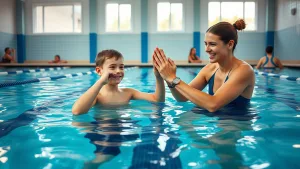
— Infants (0–3 years): build basic comfort, breath control and parent-child trust in water. Goals: relaxed submersion, blowing bubbles, gentle floating with support.
— Toddlers (3–5 years): independence around water, basic propulsion. Goals: unassisted floating for short periods, motivated to put face in water, kicking and forward movement with minimal aids.
— Early school age (6–9 years): technique foundations. Goals: independent front/back float, coordinated kicking and arm movement, short continuous swims (5–15 m).
— Older children & teens (10+), adults: stroke refinement, endurance. Goals: swim 25–200+ meters, efficient freestyle/backstroke, safe open-water awareness for adolescents.
Principles for building water confidence and technique
— Start small and predictable: short, frequent exposures beat long, infrequent sessions.
— Positive reinforcement: praise effort, not just results. Avoid punitive approaches.
— Gradual skill layering: master floating and breath control before demanding strokes.
— Drills plus play: structured technique practice + games to keep motivation high.
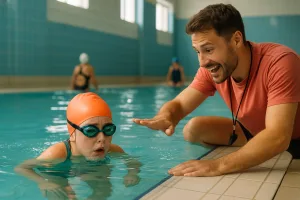
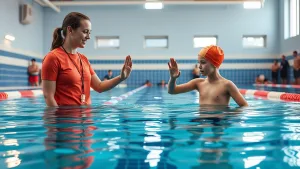
— Professional guidance: certified instructors speed progress and ensure safety.
Recommended practice frequency and session structure
— Beginners (all ages): 1–2 sessions/week → 25–40 minutes per session.
— Progressing learners: 2–3 sessions/week → 40–60 minutes per session.
— Competitive or serious fitness swimmers: 4–6 sessions/week with dryland work.
Typical 45-minute beginner session:
1. Warm-up & breathing games — 5–8 min
2. Water confidence drills (floating, submersion) — 8–10 min
3. Basic kicking and arm pattern practice — 10–12 min
4. Short continuous swims & turns practice — 8–10 min
5. Cool-down & positive wrap-up — 4–5 min
Sample 8-week plan for a beginner child (3 sessions/week)
— Weeks 1–2: Focus on face-in-water tolerance, blowing bubbles, assisted floating.
— Weeks 3–4: Independent floating on back and front, basic kicking with board.
— Weeks 5–6: Introduce arm movements and glide-to-kick transitions, short 5–10 m swims.
— Weeks 7–8: Combine coordinated strokes, increase continuous swim distance to 15–25 m.
Practical tips for parents and adult learners in Ufa
— Start with short sessions and increase duration as comfort grows.
— Choose pools with warm shallow areas for beginners and a visible lifeguard.
— Bring goggles (comfort and visibility), a snug swim cap, and a towel. Avoid long reliance on floaties — use them only temporarily under instructor guidance.
— Keep lessons consistent: a steady weekly schedule is more effective than irregular bursts.
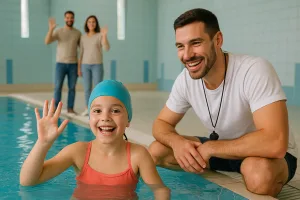
— Celebrate milestones publicly (stickers, certificates) to reinforce confidence.
— Monitor health: chlorine sensitivities are possible — choose well-maintained pools and shower before/after swimming.
Safety and instructor qualifications
— Look for instructors certified by recognized organizations (regional swimming federations or national bodies). In Russia, many clubs align with the Russian Swimming Federation (Всероссийская федерация плавания).
— Ensure lessons occur in supervised zones with lifeguard coverage.
— Know basic water-safety rules: never swim alone, avoid running near the pool, and supervise young children at all times.
Finding swim programs in Ufa
— Check municipal sports centers and детские спортивные школы (children’s sports schools) — they often run affordable group lessons.
— Explore private swim schools and fitness clubs offering adult and child programs.
— Contact regional or municipal sport departments (Спорткомитет Республики Башкортостан / администрации города Уфа) for lists of accredited programs.
— Use local parenting groups and reviews on Yandex/Google to compare instructors, schedules and pool conditions.
— Ask for trial lessons — the right instructor and pool environment are critical for building confidence.
Equipment and extras
— Essential: comfortable goggles, swim cap, quick-dry towel.
— Useful training aids: kickboard, pull buoy, small fins (for technique work), mesh bag for wet items.
— Avoid overuse of flotation devices: they can delay independent skill acquisition.
Measuring progress
— Short-term signs: reduced clinginess at pool edge, willingness to put face in water, steady improvement in floating and kicking.
— Medium-term: swimming short distances unaided, coordinated breathing.
— Long-term: swimming 25–200+ m, confident water entry and exits, ability to handle unexpected mild open-water conditions.
Closing — Getting started in Ufa
Consistency transforms fear into skill. Start with a small commitment — two short sessions per week — and build from there. Locate a nearby pool with certified instructors, set realistic milestones, and celebrate each step. In Ufa, regular practice not only improves physical health but builds a confident, capable swimmer for life.
If you’d like, I can draft a sample 4-week lesson plan for a specific age group (infant, toddler, school-age child or adult) tailored to Ufa’s seasonal pool availability. Which age group should we plan for?