Growing Water Confidence and Strong Bodies: The Power of Consistent Swimming Practice in Ufa
Swimming is more than a sport — it’s a life skill that builds confidence, resilience, and whole-body health. In Ufa, where long winters and a strong local culture of physical activity meet, steady practice in the pool becomes an ideal way for children and adults to thrive year-round.
Why water confidence matters
— *Safety first:* Comfort in the water significantly reduces panic and decreases drowning risk.
— *Foundation for learning:* Confidence lets swimmers focus on technique instead of fear.
— *Transferable life skills:* Persistence, self-regulation, and problem-solving grow as swimmers overcome challenges.
Physical and mental benefits of regular swimming
— Cardiovascular health: sustained, low-impact aerobic exercise that strengthens the heart and lungs
— Muscular development: full-body engagement — arms, core, legs — with minimal joint stress
— Flexibility and posture: repetitive, range-of-motion movements improve mobility
— Mental well-being: swimming reduces stress, improves mood, and boosts concentration
— Rehabilitation and longevity: ideal for recovery, chronic conditions, and healthy aging
The role of consistent practice
Consistency beats sporadic intensity. Regular short sessions produce better technique and fitness gains than infrequent long workouts.
Recommended frequency (general guide):
— Beginners (kids & adults): 2–3 sessions/week, 30–45 minutes
— Intermediate learning new strokes: 3–4 sessions/week, 45–60 minutes
— Competitive or fitness-focused: 4–6 sessions/week, 60+ minutes
Consistency should be paired with progressive goals and regular technique feedback to avoid plateaus and injury.
Age-focused development pathway
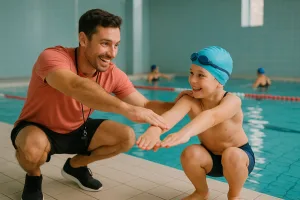
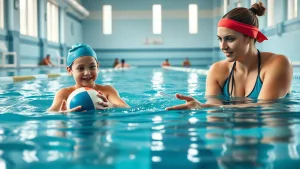
— Infants & toddlers: gentle introduction, water acclimation, breath control, parent-led classes — build trust and positive association.
— Preschool (3–6 years): independence in shallow water, floating, basic kicking, short submersion play.
— School-age (7–12 years): formal stroke technique, endurance, safety skills (treading water, open-water awareness).
— Teens & adults: stroke refinement, conditioning, skill specialization (lifesaving, triathlon prep).
— Seniors: mobility-focused sessions, gentle cardio, balance and fall-prevention work.
Practical drills to build water confidence
— Entry and exit practice: repeated safe entries and exits until they feel automatic
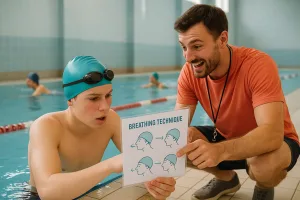
— Breath control games: blow bubbles, count exhalations, short-face submersion progressions
— Floating progressions: supported back floats, gradually reduce support until independent
— Kicking drills with board: isolate legs, build propulsion and trust in body position
— Short “swim to target” tasks: seat-to-seat or tile-to-tile goals that reward small achievements
Use praise, visible progress markers (sticker charts, timed lengths), and regular positive feedback.
Structuring a productive practice session
— Warm-up (5–10 min): easy swimming, dynamic mobility on deck
— Technique focus (10–20 min): drills for stroke mechanics or breathing
— Main set (10–25 min): interval swims or continuous laps suited to level
— Cool-down (5–10 min): easy aerobic movements and stretching
— Reflection (2–5 min): short review with coach/parent on what improved
Choosing a swim program in Ufa
Look for:
— Certified instructors with first-aid and lifeguard training
— Child-to-coach ratios appropriate to age and ability
— Warm, well-maintained pools (indoor facilities are ideal for Ufa’s climate)
— Clear progression plans and measurable goals
— Trial lessons and transparent pricing
— Positive parent/testimonial feedback and community reputation
Local context tip: Ufa’s climate makes indoor pools an asset for year-round training. Contact municipal sports centers, local fitness clubs, universities or community swim schools to compare class formats and coach credentials. The Ministry of Physical Culture and Sports of Bashkortostan can point you toward licensed programs and competitive clubs if you want to progress further.
Safety essentials
— Never leave young children unattended near water
— Ensure lifeguard presence during lessons or practice sessions
— Insist on proper hygiene (shower before swimming) and pool rules
— Gradual progression: avoid forcing submersion or long breath-holding exercises
— Keep emergency contacts and basic first-aid knowledge accessible
Getting started — a simple plan
1. Book a trial lesson at a nearby indoor pool.
2. Commit to 2–3 weeks of regular sessions to form a habit.
3. Track small wins: number of independent floats, laps, or new skills.
4. Adjust frequency and coaching level after a month based on progress.
Conclusion
In Ufa, consistent swimming practice offers a safe, effective way to develop water confidence and lifelong physical health. With the right program, steady goals, and a supportive environment, swimmers of all ages can transform anxiety into skill and fitness into habit. Start small, stay regular, and celebrate progress — the pool is where confidence becomes second nature.