Introduction
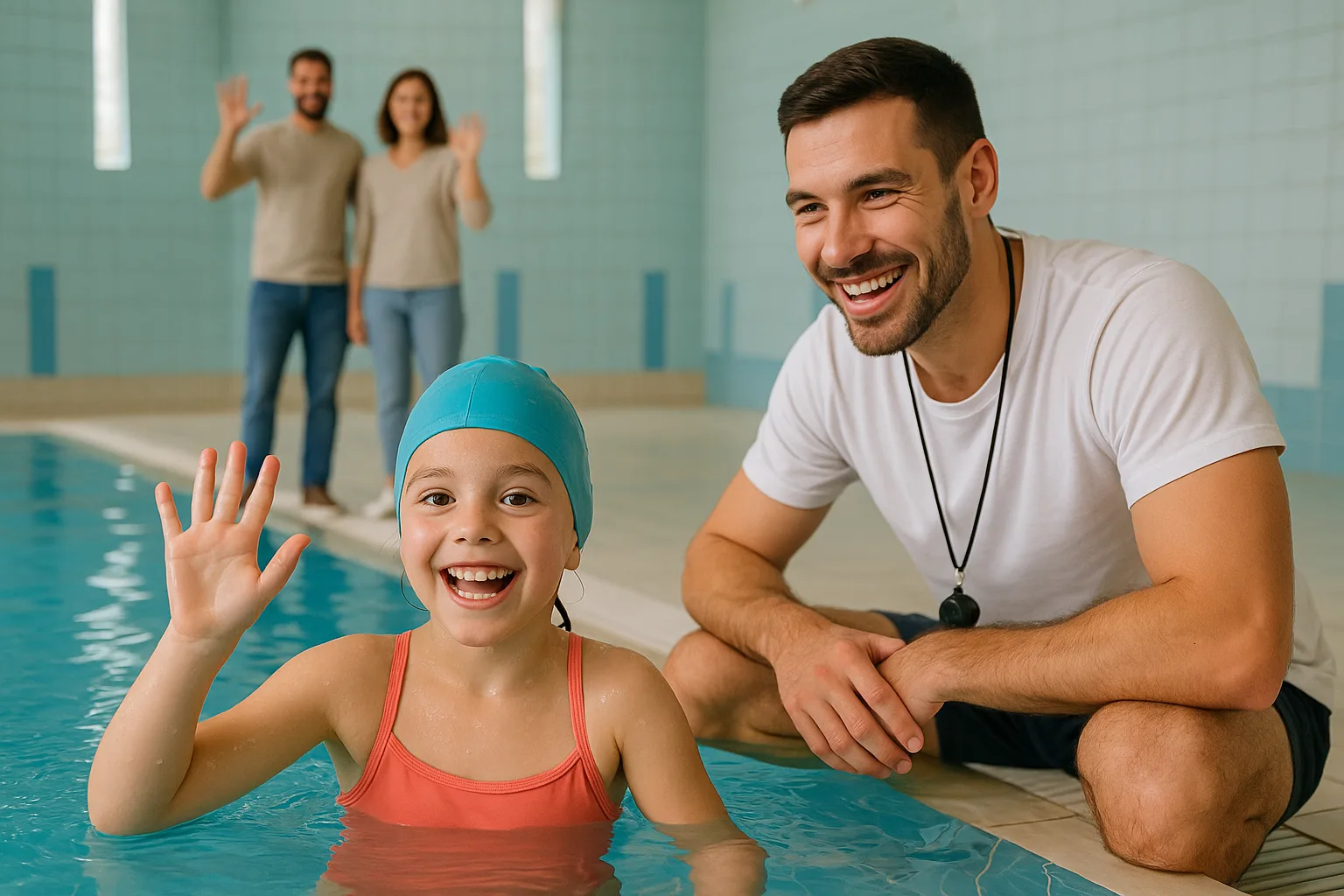
Swimming is more than a sport — it’s a life skill that builds water confidence, improves physical health, and supports emotional well-being. In Ufa, where indoor pools make year-round practice possible despite long winters, a consistent, well-structured swimming routine can produce measurable results for children and adults alike.
Why consistency matters
— *Skills compound over time.* Repeated practice reinforces motor patterns, breathing control, and efficient technique.
— *Confidence grows with predictable progress.* Small, regular wins reduce fear and encourage risk-appropriate independence in water.
— *Health benefits accumulate.* Cardiovascular fitness, muscular endurance, and coordination improve more reliably with steady training than with sporadic sessions.
Key benefits of swimming practice
— Physical health: Low-impact full-body workout that strengthens heart, lungs, and muscles while reducing joint stress.
— Water confidence: Gradual exposure, skill mastery, and positive reinforcement reduce anxiety and improve safe behavior in and around water.
— Motor and cognitive development (children): Improved balance, coordination, and attention.
— Mental well-being: Reduced stress, better sleep, and increased mood stability through aerobic exercise and focused activity.
Who benefits
— Children (infants to teens): Early, gentle exposure builds comfort and lifelong safety; age-appropriate technique improves coordination.
— Adults: Beginners gain fitness and safety; returning swimmers rebuild endurance without high injury risk.
— Seniors: Low-impact conditioning helps maintain mobility, balance, and cardiovascular health.
— People with special needs: Aquatic therapy and adapted classes can support mobility, sensory integration, and confidence in a supportive environment.
Principles of an effective program
— Frequency: Aim for 2–4 sessions per week for steady improvement; short, consistent sessions beat irregular long ones.
— Progression: Break skills into small, achievable steps—breathing, floating, kicking, then stroke integration.
— Technique over speed: Proper form prevents bad habits and reduces injury risk.
— Variety: Combine drills, games, endurance sets, and breathing exercises to keep engagement high.
— Positive coaching: Encouragement and measurable goals (time, distance, skill checklist) accelerate confidence.
Sample weekly practice plans
— Beginner child (ages 4–7):
— 2× per week, 30–40 minutes
— Focus: water entry, breath control, floating, basic kicking games
— Use: toys and games to make progress feel like play
— Beginner adult:
— 3× per week, 45 minutes
— Focus: buoyancy, rhythmic breathing, streamline, 2–4 laps of mixed stroke practice
— Include: 5–10 minutes of dryland mobility before sessions
— Intermediate swimmer (youth/adult):
— 3–4× per week, 60 minutes
— Focus: technique drills, interval sets, one skill day (starts/turns)
— Add: one open-water or longer continuous swim monthly if interested
Practical tips to build water confidence
— Start shallow and gradually increase depth. Celebrate each milestone.
— Teach breathing first: blow bubbles, then inhale calmly on the turn of the head.
— Use flotation aids temporarily, but phase them out as skills improve.
— Keep sessions short and positive for anxious learners—end on a success.
— Incorporate games and social elements to reduce fear through fun.
— Model calm behavior: children mirror adult reactions to water.
Safety essentials
— Never leave children unattended near water.
— Choose instruction that emphasizes rescue awareness and basic survival skills.
— Ensure pools have lifeguards, clear depth markings, and modern filtration systems.
— Learn basic water rescue and CPR — essential for parents and caregivers.
Choosing the right swim school in Ufa
Look for:
— Qualified instructors with certifications in swim teaching and first aid.
— Age-appropriate programs (baby classes, school-age groups, adult sessions).
— Small group sizes or private lessons for faster confidence-building.
— Clean, well-maintained indoor pools and visible safety protocols.
— Positive parent reviews and transparent progression plans.
Local considerations:
— Ufa’s climate makes indoor pools preferable for year-round training.
— Many clubs offer baby/toddler programs and rehabilitative aquatic therapy — useful if you seek specialized support.
— Compare trial lessons to evaluate teaching style and instructor rapport.
Measuring progress
— Track specific, measurable milestones: float independently, 25 m freestyle with rhythmic breathing, 100 m continuous swim.
— Keep a simple log of sessions, focus points, and emotional responses to see both skill and confidence growth.
— Celebrate non-quantitative progress: reduced hesitation, staying relaxed in deeper water, trying a new stroke.
Conclusion and next steps
Consistent swimming practice in Ufa is a powerful way to build lasting water confidence and improve physical health across ages. Start with short, frequent sessions focused on small skills, choose an instructor and facility that prioritize safety and positive coaching, and measure progress in both skills and comfort. With steady practice, the pool becomes a place of strength, safety, and joy.
If you’re in Ufa and ready to begin, book a trial lesson at a local indoor pool, ask about progression plans, and commit to a simple schedule—consistency is the single best investment for faster, safer results.